I cycled a lot as a child after learning to ride on a friend’s Raleigh Chopper. This was mainly with a second hand bike an auntie obtained from her neighbour, but then a Raleigh Grifter (my brother’s) and a Halford’s Vitesse road bike. By the time I left Kirkcaldy for university in Dundee in 1987, however, these bikes were past their best and replacements were unaffordable.
Once I started my PhD in 1992, I bought a bike – a Diamondback Curaca. What had changed in the intervening 5 years was that cycle helmets had become more common. I bought one with my new bike as it made sense, but found it was not unusual to be pointed at by pedestrians in Dundee where I lived. We moved to Edinburgh in 1996 and I found that cycle helmets were more common (and the drivers were less aggressive).
I have cycled a lot since then – mostly commuting, but I have toured Scotland (inc the Outer Hebrides), England, France, Belgium and the Netherlands. The vast majority of the time (99.9%) I wore a helmet because it still made sense to me, and when my kids came along they wore them too.
Since 1992 I think I’ve had 6 proper accidents on my bike: two due to ice, one in my drive, two with cars (their fault, one driver was charged) and one on the canal towpath in Edinburgh. I don’t think my helmet was damaged in any of these, but there was one broken arm and a few scraped knees. Nonetheless I was glad I was wearing it.
On the 10th of August 2021 I spotted this tweet:
I saw this and thought of a recent incident in my Ward where a SUV driver had pulled out in front of cyclist using a Spaces for People lane (the junction has now been made safer). The cyclist’s bike was destroyed but a trip to A&E showed that he had been relatively lucky in terms of physical injuries. Like Storm Huntly above, he was clear that he thought his helmet had saved him – an uncontroversial observation which I accepted. In responses to Storm Huntly’s tweet, I retold his story on Twitter and encouraged people to wear a helmet – “Wear a helmet!” I said.
I did not get quite the response I expected. Three replies stand out:
- “As there are, overall, many more pedestrian, car driver and bath/shower user injuries do you recommend helmet wearing for them too Scott?” – Cllr David Key
- “I’m in the business of selling helmets and I don’t recommend wearing a helmet. It’s a personal choice. I doubt this ‘saved Storm’s life’. Probably saved a bump or an abrasion, though.” – Hart’s Cyclery
- “There is no evidence that cycle hats reduce either mortality or morbidity for transport cyclists. This is due to risk compensation by riders, increased aggression from motorists and a few cases where a cycle hat causes injury in a fall. Hats are not the answer – segregation is.” – Overlander
Now, it is important to note that none of these people are saying that people should not wear helmets. They are however trying to say that the risk of an accident while cycling is low compared to other everyday activities, and that investing in cycle lanes is the best way to reduce the risks associated with cycling. Nonetheless, I found the scepticism about the benefits of wearing a helmet interesting.
Of course, it is possible to argue for changes to road network which reduce the likelihood of incidents whilst also making the case for measures which reduce their consequences. Indeed, this is entirely sensible as we know that around 16% of fatal / serious cyclist incidents reported to the police do not involve a collision with another
vehicle, but are caused by the rider losing control of their bicycle. Furthermore, peer reviewed research has concluded that helmet wearing is beneficial “especially in situations with an increased risk of single bicycle crashes, such as on slippery or icy roads”.
Indeed, in many places in the UK we are a million years away from having safe cycling networks to get us from A to B. Even where they so exist they tend to make the safest section safer, but offer little support at junctions (see Lanark Road).
I think RoSPA sums up my feelings pretty well:
In 2018, 99 cyclists were killed, 4,106 were seriously injured and 13,345* were slightly injured on Great Britain’s roads. Although cyclists suffer a number of different types of injury during accidents, head injury has been identified as an important cause of death and serious injury in cycling collisions. One way in which cyclists can prevent or reduce the extent of a head injury in a cycle accident is to wear a cycle helmet… …we strongly recommend that cyclists wear a cycle helmet. However, it is important to remember that cycle helmets do not prevent crashes from happening. It is therefore vital that through infrastructure improvements, supported by education and training that we reduce the primary risk factors.
The Royal Society for the Prevention of Accidents
Of course, we live in an era where we have instant access to information and misinformation. If you don’t believe the earth is spherical, the Covid-19 vaccines are safe or the the Climate Emergency is real there are websites which will cater for your views. The debate about cycling helmets is no different, but is based on the perceived uncertainty regarding the benefits of wearing a helmet rather than conspiracy theories.
A quick look at Google Scholar suggests that there is a fair bit of work being undertaken in this area. I searched for “cycle helmet” from 2000 – 2021 and ranked the return by relevance, and these were the top 20 results:
- Non‐legislative interventions for the promotion of cycle helmet wearing by children – This observed that “helmets reduce bicycle‐related head injuries, particularly in single vehicle crashes and those where the head strikes the ground”, and that “non‐legislative interventions appear to be effective in increasing observed helmet use, particularly community‐based interventions and those providing free helmets”.
- The impact of compulsory cycle helmet legislation on cyclist head injuries in New South Wales, Australia – This concluded “we have identified evidence of a positive effect of compulsory cycle helmet legislation on cyclist head injuries at a population level such that repealing the law cannot be justified”.
- Emotional reactions to cycle helmet use – This found that “cycling with a helmet did not lead to increased speed, or to changes in emotional reactions as would have been expected from a risk compensation perspective”, but did note “those who use helmets often cycle more slowly when not wearing a helmet“.
- Performance analysis of motor cycle helmet under static and dynamic loading – Not relevant.
- The impact of compulsory cycle helmet legislation on cyclist head injuries in New South Wales, Australia: A rejoinder – This paper challenges the conclusion of Paper 2 above and suggests the helmets “protect at best 10%-15% of cycling related head injuries”, and concludes “Bicycle helmets may provide a small benefit for some types of low speed crashes, but the conclusion that there needs to be mandatory helmet legislation for all adults and children is not justified”.
- Cycle helmet ownership and use; a cluster randomised controlled trial in primary school children in deprived areas – This observes that “bicycle helmets afford protection against head and brain injuries to wearers of all ages involved in all types of crash, whether or not another vehicle is involved. Although childhood cycle injuries appear to be reducing in incidence, there were still more than 7500 children under 16 admitted to NHS hospitals between 1991 and 1995 with bicycle related head injuries… There is a steep social class gradient in mortality from pedal cycle injury, with children from social class V having a mortality rate four times higher than children from social class I.”. This paper concludes that “an educational pack plus a form to order a free cycle helmet is an effective way of increasing bicycle helmet ownership and use and reduces inequalities in helmet ownership among children in deprived areas”.
- Demographic, socioeconomic, and attitudinal associations with children’s cycle-helmet use in the absence of legislation – Behind paywall.
- Inequalities in cycle helmet use: cross sectional survey in schools in deprived areas of Nottingham – This concludes that “programmes aimed at preventing head injury among child cyclists will need to address the inequality in helmet ownership that exists between children residing in deprived and non-deprived areas”.
- Cycle helmet wearing in 2002 – See Paper 10.
- Cycle helmet wearing in 2004 – This is a regular report which has been published since 1994. It shows that cycling helmet usage has been increasing amongst adults, but less so with children.
- Increasing cycle helmet use in school-age cyclists: an intervention based on the Theory of Planned Behaviour – This observed that “helmets reduced the risk of head and brain injury by 63%-88%” and studied measure to increase the numbers of children wearing helmets.
- Systematic reviews of bicycle helmet research – This article concluded that “there is good evidence that bicycle helmets are effective in reducing head and facial injury in the event of a crash, and that helmet legislation is also likely to be effective at a population level, although high quality controlled research must continue. We know that non-legislative interventions are effective in increasing helmet wearing rates in children, particularly community-based programs that provide free helmets.”
- Changes in head injury with the New Zealand bicycle helmet law – This questions the efficacy of making helmets compulsory at a time when the number of people wearing helmets is increasing. It concludes that “the large increases in wearing with helmet laws have not resulted in any obvious change over and above existing trends, helmet laws and major helmet promotion campaigns are likely to prove less beneficial and less cost effective than proven road-safety measures, such as enforcement of speed limits and drink-driving laws, education of motorists and cyclists and treatment of accident black spots and known hazards for cyclists.”
- Cycle Helmet Performance in the Real World – Not peer reviewed(?) and contains no references. It concludes that the “clearest outcome of promoting helmet use has been to increase the public’s perception of cycling as a dangerous activity, leading many people to forego the overall health benefits they might otherwise enjoy. Research has shown that helmet promotion campaigns are linked strongly to a decrease in the number of people cycling”.
- Head injuries to bicyclists and the New Zealand bicycle helmet law – This paper concludes that “the helmet law has been an effective road safety intervention that has lead to a 19% reduction in head injury to cyclists over its first 3 years.”
- The impact of mandatory helmet-use legislation on the frequency of cycling to school and helmet use among adolescents – This concludes that “the implementation of the helmet-use law did not have a negative impact on the frequency of cycling to school.”
- A computational simulation study of the influence of helmet wearing on head injury risk in adult cyclists – This paper concludes that “bicycle helmets are effective in reducing the severity of head injuries sustained in common accidents.” and that helmets were effective over the entire range of cycle speeds studies, up to and including 14 m/s (31.2 mph)”.
- The impact of mandatory helmet law on the outcome of maxillo facial trauma: a comparative study in Kerala – Not relevant.
- Application of Reverse Engineering and Impact Analysis of Motor Cycle Helmet – Not relevant.
- MADYMO simulation of children in cycle accidents: A novel approach in risk assessment – This paper concluded that “wearing a cycle helmet was found to reduce the probability of head injuries, reducing the average probability of fatality over the scenarios studied from 40% to 0.3%.”
I then searched for “bicycle helmet” from 2000 – 2021 and ranked the return by relevance, and these were the top 20 results:
- The risk compensation theory and bicycle helmets – This paper suggest that when wearing a helmet cyclists may take more risk. The paper explains why this may be the case, but offers no empirical evidence. The authors note “The empirical difficulty with establishing the relevance of risk compensation to cycle helmets is that, compared with other activities such as motoring, there is a shortage of reliable data.”
- Effect of legislation on the use of bicycle helmets – This paper documents how in Canada the “rate of helmet use rose dramatically after legislation was enacted” in 1997 and that the “proportion of injured cyclists with head injuries in 1998/99 was half that in 1995/96”
- Risk compensation and bicycle helmets – These researchers observed 35 volunteers cycling down a short hill with and without helmets. They found that “routine helmet users reported higher experienced risk and cycled slower when they did not wear their helmet“. However, for “cyclists not accustomed to helmets, there were no changes in speed, perceived risk, or any other measures when cycling with versus without a helmet“. The paper concludes that the “findings are consistent with the notion that those who use helmets routinely perceive reduced risk when wearing a helmet, and compensate by cycling faster”.
- Oblique impact testing of bicycle helmets – This paper concluded that the “current helmet designs provide adequate protection for typical oblique impacts onto a road surface, in terms of the peak linear and rotational head accelerations“.
- Bicycle helmets–A case of risk compensation? – This paper is from the same authors as Paper 3 in the first list and Paper 3 in this list. The researchers conclude: “The results give less support to a risk-compensation explanation, in particular because the speeding behaviour of the speed-happy group is more connected to other types of equipment than to bicycle helmets. The helmet is more or less just one element in the total equipment package. So it is not because of the helmet that these cyclists ride fast; they use all the equipment (including helmets) because they want to ride fast.”
- Bicycle helmets–To wear or not to wear? A meta-analyses of the effects of bicycle helmets on injuries – There are three key conclusions here – (1) Bicycle helmets reduce head injury by 48% and serious head injury by 60%; (2) Bicycle helmets reduce face injury by 23% and do not increase cervical spine injury; and, (3) Bicycle helmet effects are larger in single bicycle crashes than in collisions. The final sentence in the paper – “Thus, for an individual cyclist, the results suggest that wearing a helmet can be recommended, especially in situations with an increased risk of single bicycle crashes, such as on slippery or icy roads.”
- Bicycle helmets – Behind a paywall, but the abstract notes “the bicycle helmet is a very effective device that can prevent the occurrence of up to 88% of serious brain injuries.”
- Bicycle helmets work when it matters the most – This paper concludes that “injury prevention programs should advocate the use of helmets in bicycle riders especially in the teenage group where least compliance with bicycle helmet use was observed.”
- Protective effect of different types of bicycle helmets – This is behind a paywall but recommends the use of hard shell helmets over foam ones.
- The efficacy of bicycle helmets against brain injury – this paper re-analysed data from 1987–1998 which was used by a separate study to conclude that cycle helmets prevent serious injury to the brain. This paper concluded that the “analysis does not provide scientific evidence that bicycle helmets, not being tested for capacity to mitigate the main factors that cause serious injury to the brain, do reduce it” and that “the Australian policy of compulsory wearing of helmets lacks a basis of verified efficacy against brain injury”.
- Bicycle helmets and risky behaviour: A systematic review – this paper built on the the work of Paper 3 and 5 in this first list, and Paper 3 the first list. The researchers conclude: “review found little to no support for the hypothesis bicycle helmet use is associated with engaging in risky behaviour”.
- The Cochrane Collaboration and bicycle helmets – This is from the same researcher as Paper 10 and again critiques the work of others. This time it is noted that the Cochrane review Helmets for preventing head and facial injuries in bicyclists took no account of the “scientific knowledge of types and mechanisms of brain injury”.
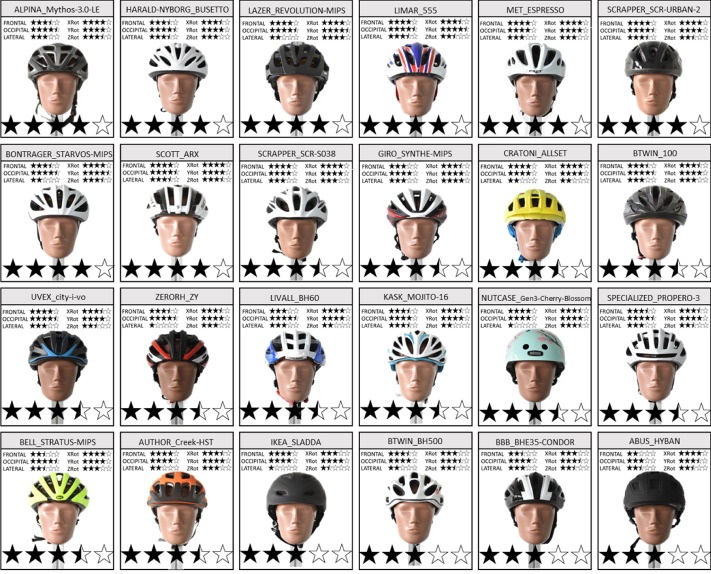
- Differences in impact performance of bicycle helmets during oblique impacts – This research evaluated 10 helmet designs and noted significant variations in performance.
- Heat transfer variations of bicycle helmets – Not relevant.
- Increasing the use of bicycle helmets: lessons from behavioral science – This paper focused on measurers to encourage younger people to wear cycle helmets.
- Protection performance of bicycle helmets – This study presents a helmet test method that considers oblique impact in addition to drop tests, as well as brain tolerance limits based on recent biomechanical research.
- Bicycle helmets: a review of their effectiveness: a critical review of the literature – This is a DoT report which considered the case for making cycle helmets mandatory. It made this observation – “There is now a considerable amount of scientific evidence that bicycle helmets have been found to be effective at reducing head, brain and upper facial injury in bicyclists. Such health gains are apparent for all ages, though particularly for child populations.”
- Bicycle helmets and the law – Behind a paywall.
- Testing of bicycle helmets for preadolescents – This is not peer reviewed(?). This study aims to provide guidelines for a helmet testing procedure especially designed for preadolescents.
- Nonuse of bicycle helmets and risk of fatal head injury: a proportional mortality, case–control study – This study concludes that “not wearing a helmet while cycling is associated with an increased risk of sustaining a fatal head injury. Policy changes and educational programs that increase the use of helmets while cycling may prevent deaths.”
So what do these 40 papers tell us? Firstly, it is broadly accepted cycle helmets are effective at reducing the likelihood of death or head, brain and upper facial injury – this makes sense. This finding fuelled studies considering how to increase the the number of children using helmets, particularly from more deprived areas. It also appears that the cyclists wearing helmets tend not to take more risks – i.e. there is scepticism about the “risk compensation”.
The main controversary in the field appears to be whether not making helmets mandatory is justified. This issue is that it makes it is just another barrier to people starting to cycle (some studies contradict this). This is understandable as most novice cyclists will buy a cheap bike, and then are stung for the extras – lights, lock & helmet. At a minimum, this will come in at £50, but could easily be double that.
I guess the other question is how dangerous is cycling really? Is cycling really safer than driving as some suggest? In 2019 alone, 100 pedal cyclists were killed, 4,333 seriously injured and 12,451 slightly injured in the UK (2020 was far higher). However, based on time spent travelling a cyclist is 500% more likely to have a fatal accident than a car driver – they are vulnerable road users. However, that’s still only one fatality every 9,000,000 bike rides and let’s not forget that for individuals shifting from cars to bicycles the estimated beneficial effects of increased physical activity are “substantially larger than potential mortality due to increased air pollution exposure and traffic accidents“.
Is cycling more dangerous that walking? This is an odd question as pedestrian already have the segregated lanes cyclists want (i.e footpaths!). FullFact looked at this, and concluded: “The overall and KSI casualty rate per billion kilometres travelled is greater for cycling than walking, suggesting that the former is more dangerous on this measure”.
Cycling being more dangerous than walking and driving is why we need to invest in well designed and maintained cycling infrastructure in the UK and elsewhere. We have seen progress on this in recent years in Edinburgh, but the flawed approach since Covid-19 has polarised the debate here.
There is a also a growing case for for 20mph schemes in the UK. The European Transport Safety Council notes – “At speeds of below 30 km/h, cyclists can mix with motor vehicles in relative safety.” and that “Traffic calming measures in 30 km/h zones are essential to discourage drivers from exceeding the speed limit.”
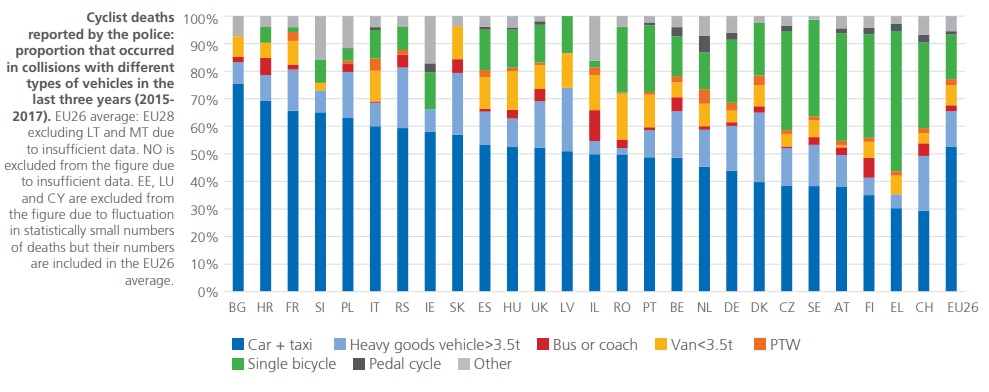
We also should not pretend that investing in cycling infrastructure can lead to a situation where we have no incidents . In the Netherland where levels of cycling are far higher than the UK and the infrastructure is far better, the number of cyclists being killed there is very similar to here despite that country only having about a third of the population. The story is worse for for Denmark. Indeed, in the Netherlands and Denmark 5-6 people per million each year when cycling (in the UK it is 1.6 people per million), and most of these deaths are due to collisions with vehicles (see the chart at the bottom of this page). The higher number of deaths is explained by the fact that people cycle far more in these countries – the death rate per kilometre cycled is 50% higher in the UK.
Nonetheless, the Dutch Road Safety Research Foundation (in a report commissioned by the Dutch Transport Ministry) predicts that if cyclists in the Netherlands always wore a helmet, there would be 85 fewer road deaths a year.
This means that whilst improving the safety for cyclists in the UK is essential, even when we achieve the level of the Netherlands and Denmark incidents will still occur. It is therefore important that we think about how we reduce the impact of the incidents that will continue to occur with or without a step change in the provision of high quality cycling infrastructure in the UK. This is why it makes sense to wear a helmet.


 Dr Scott Arthur