Introduction
The two-child benefit cap and its associated “rape clause” have been among the most controversial welfare policies in recent years. Introduced in 2017, the cap restricts Universal Credit and Child Tax Credit to the first two children in a family, with only narrow exemptions. This policy has pushed hundreds of thousands of children into poverty, and its removal is not just morally correct – it’s a vital step toward improving life chances for Scotland’s next generation.
Lifting Children Out of Poverty
The evidence is clear: scrapping the two-child limit is one of the most cost-effective ways to reduce child poverty. Government estimates suggest that ending the cap will lift around 450,000 children out of poverty across the UK by 2030, with Scotland alone seeing over 51,000 fewer children in poverty – including 1,300 kids in Edinburgh South West. These families will now be able to better afford essentials like food, heating, and clothing.
Child poverty is not just about income; it affects every aspect of a child’s life, from nutrition and housing to educational attainment and mental health. Removing this cap would give thousands of families breathing space and help prevent the cycle of poverty that traps future generations.
Working Families are Hit Hardest
Contrary to the narrative from the Tories that the cap targets “workless households,” the majority of affected families are already in employment. Research shows that around 60% of households impacted by the two-child limit have at least one working parent, and among two-parent families, that figure rises to 81%. These are families doing everything society asks, working hard & paying taxes, yet still trapped in poverty because of an arbitrary policy.
This reality exposes a fundamental flaw: poverty is not a lifestyle choice. It is often the result of structural issues such as low wages, insecure work, and rising living costs. Removing the cap acknowledges that families should not be penalised simply for having more than two children.
Life Happens: Why Families Are Vulnerable
It’s important to recognise that families don’t always remain in the same circumstances. Relationship breakdown, redundancy, and health problems can dramatically change a household’s financial stability. A family that was once secure can quickly find itself struggling, and the two-child cap punishes them for circumstances often beyond their control.
Imagine a household where both parents work, but one loses their job due to redundancy. Or a parent develops a serious health condition, reducing their ability to work. These are real-life situations that can happen to anyone. Welfare should act as a safety net during these difficult times, not a barrier that deepens hardship.
The Rape Clause: A Cruel Exception
The so-called “rape clause,” which forces survivors of sexual violence to disclose their trauma to access benefits for a third child, is widely condemned as inhumane. Its abolition is not only a moral imperative but also a signal that our welfare system should protect dignity rather than compound harm. No one should have to relive trauma to secure basic financial support for their child.
The Impact of Poverty on Health, Wellbeing, and Life Chances
Poverty is not just an economic issue, it is a public health crisis. Children growing up in poverty are more likely to experience poor physical health, including higher rates of respiratory illness, obesity, and developmental delays – all things that cost the taxpayer money. They are also at greater risk of mental health problems such as anxiety and depression, often caused by the stress of living in insecure and overcrowded housing or going without essentials. This is a particular issue in Edinburgh due to the Scottish Government’s housing crisis.
The long-term consequences are stark. Poverty in childhood is strongly linked to lower educational attainment, reduced employment prospects, and poorer health outcomes in adulthood. In short, poverty limits life chances. By removing the two-child cap, we can help break this cycle, giving children the stability and resources they need to thrive.
Balancing Compassion with Fiscal Responsibility
Of course, any discussion about welfare reform must recognise the need to manage public spending responsibly. Cutting the overall welfare bill is a legitimate goal, but it should never come at the expense of children’s futures. The challenge is to design a system that is both sustainable and humane, one that ensures support is there when people need it most, while encouraging pathways out of poverty through work, education, training and opportunity.
Removing the two-child cap is not about expanding dependency; it’s about preventing long-term harm and giving families a fair chance to thrive. In fact, investing in children now saves money later by reducing demand on health services, social care, and the criminal justice system.
Improving Life Chances Through Education
Ending the two-child cap is only part of the solution – putting more money in the pockets of parents helps put food on the table, but does little to impact on life chances. Poverty and educational attainment are deeply linked: children growing up in hardship are more likely to struggle at school, limiting their future opportunities. The Scottish Government’s own Attainment Challenge recognises this, but has failed to close the gap after Nicola Sturgeon made a pledge to do so in 2015.
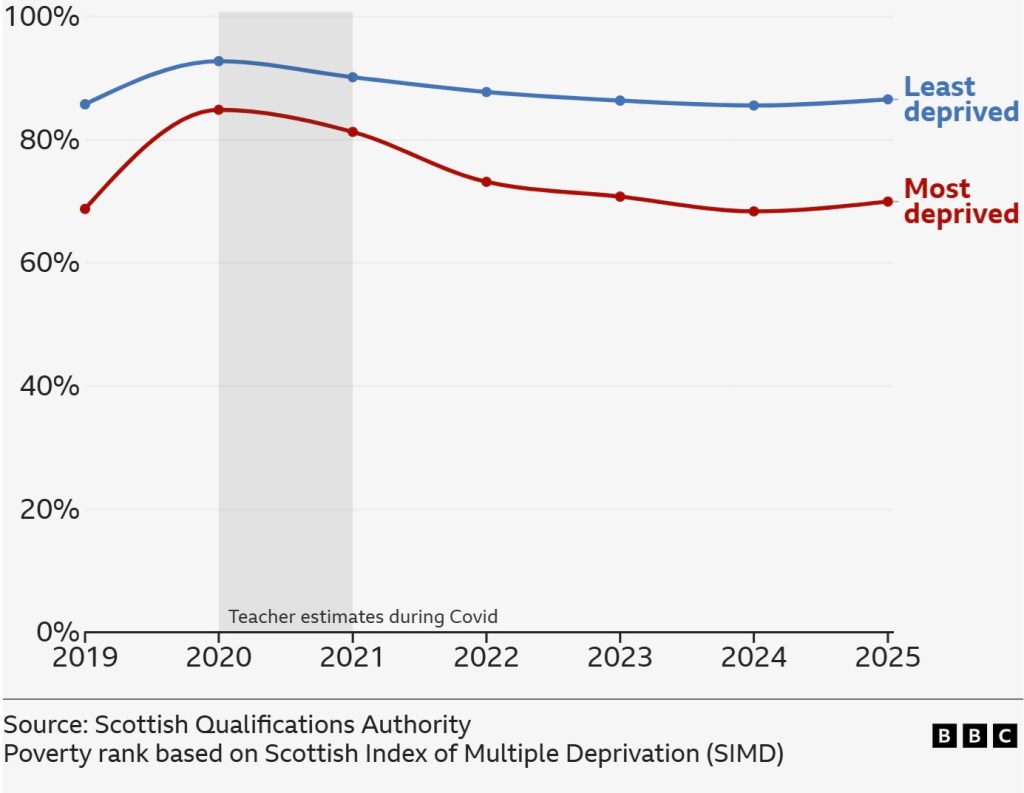
Additional household income from scrapping the cap will help families afford basics like school uniforms, internet access, and nutritious meals – all essential for learning. But welfare reform must be paired with bold action in education in Scotland: investing in early years, tackling the cost of the school day, and ensuring every child, regardless of background, can thrive. The Scottish Government is failing to do this.
What Next?
If we are serious about ending child poverty, we must act now. That means:
- Backing the end of the two-child cap and rape clause to lift thousands of children out of poverty.
- Supporting steps to get more people into secure, well-paid work, so families can build stability and independence.
- Using the 2026 Holyrood election as a turning point, it is a real chance to ensure our teachers have the resources they need to fix Scotland’s education system and close the attainment gap.
Child poverty is not inevitable. It is a political choice, and we have the power to choose differently. Let’s make that choice for Scotland’s children.

 Dr Scott Arthur